

If you’re searching for the perfect awning to transform your outdoor space, we’ve got you covered. We know windy conditions around the mid-Atlantic region can be a concern when selecting the right awning. In this guide, we’ll look closer at the exciting world of awnings and explore how different types can withstand the mighty gusts that grace the Garden State.
Understanding the wind resistance capabilities of different awning types is your secret weapon when making an informed decision that guarantees your outdoor haven’s longevity and safety. You’ll be able to enjoy your outdoor space with unwavering confidence, no matter what the weather brings, by selecting an awning specifically designed to take on your region’s challenges.
Not sure if your awning can handle NJ coastal winds? We’ll assess it for free.
Types of Awnings and Their Wind Resistance
Awnings are an excellent addition when enhancing your outdoor space’s appeal and functionality. They provide shade and protection from the sun’s scorching rays while offering shelter during light rain showers. Understanding the types of awnings available and their respective wind resistance capabilities is crucial for ensuring they withstand windy conditions.
Fixed Awnings
Fixed awnings remain in a stationary position and are permanently attached to a building’s exterior. Fixed awnings are constructed with durability in mind, boasting robust frames made from materials such as aluminum, steel or other sturdy metals. This solid framework and proper installation techniques ensure these awnings endure gusty winds without compromising structural integrity.
Remarkable wind resistance capability ensures your fixed awning remains steadfast, even during moderate to strong wind gusts, providing peace of mind and reliable protection for years.
Retractable Awnings
You can extend retractable awnings manually or with motorized mechanisms to adjust the shade level. High-quality retractable awnings are constructed with durable materials such as aluminum or steel frames, ensuring resilience in the face of wind challenges.
The robust frame, coupled with advanced engineering techniques, lets retractable awnings withstand a range of wind gusts, making them stable and functional while offering a reliable shading solution even during moderately windy conditions.
Comparing Awning Styles for Windy Environments
Both styles have their advantages and considerations when it comes to wind resistance. For example, fixed awnings offer exceptional wind resistance, making them reliable for windy environments. Many praise them for their:
- Durability: They are built to last, featuring strong, rigid frames that can endure wind forces. Their solid construction and secure attachment to the building make them resistant to wind damage.
- Stability: Due to their permanent installation, fixed awnings provide a stable and stationary shelter. They are less susceptible to wind-related movement or swaying compared to retractable awnings.
- Wind resistance range: High-quality fixed awnings can withstand stronger wind gusts. However, extreme weather conditions such as hurricanes or severe storms may require retracting the awning for additional safety.
However, there are some considerations to take into account with fixed awnings. Once installed, they cannot be adjusted or retracted, limiting your control over sunlight and shade.
Retractable awnings offer the advantage of adaptability, letting you extend or retract the awning as needed. High-quality retractable awnings still provide reliable wind resistance in windy environments with their:
- Durable construction: Premium retractable awnings are built with sturdy materials such as aluminum or steel frames, ensuring they can withstand wind forces. Using high-quality fabrics or metals adds further wind resistance to the awning.
- Controlled retraction: Retractable awnings let you retract the awning. This can be useful if it is a cold day and you would prefer to sit in the sun, you can retract the awning. If it is a hot day and you are looking for shade, you can have them open.
- Wind sensor integration: Optional retractable awning wind sensors can enhance the wind resistance capabilities of retractable awnings. They provide automated protection by detecting high wind speeds and triggering the retraction process, ensuring the awning remains secure.
How Wind Can Damage Awnings
Wind can pose a significant risk to an awning’s integrity and functionality. By gaining insight into the potential risks, you’ll be better equipped to take preventative measures, choose appropriate awning styles and ensure your awnings’ long-term durability and safety in the face of challenging wind conditions.

Effects of Wind on Awning Materials
Strong winds can exert significant force on the fabric of an awning, causing it to stretch, strain or tear. If the wind becomes too forceful, it may cause the fabric to tear or detach from the frame, rendering the awning ineffective:
- Stretching and straining: Prolonged exposure to wind forces can lead to the development of stress points on the fabric, which may weaken its integrity over time.
- Billowing and flapping: Continuous flapping can stress the fabric and its attachments, increasing the risk of tears or detachment.
- Fading and weathering: The combination of wind, sunlight and other environmental factors can cause the colors to fade and the fabric to deteriorate over time.
Common Types of Wind Damage
Wind can be a formidable adversary regarding the durability and longevity of awnings. By being aware of these potential issues, you can proactively protect your awning investment and ensure its longevity.:
- Frame damage: Extreme wind conditions or sudden gusts can put excessive pressure on the frame, leading to potential damage. The frame may bend, warp or even break if subjected to forces beyond its design limits.
- Bracket or mounting failure: Insufficient anchoring or weak brackets can result in the awning becoming dislodged or detached from the building, significantly damaging the awning and surrounding structure.
- Motor or mechanism strain: High winds can strain these mechanisms excessively, potentially causing them to malfunction or fail. If the awning is not retracted in time during strong winds, the motor or gears may become damaged, making it difficult or impossible to operate the awning properly.
- Structural damage: In rare cases of powerful winds, awnings can experience significant structural damage that extends beyond the fabric or frame.
Signs of Wind Damage
Even with the best precautions and quality awnings, wind can sometimes cause damage. It is important to be vigilant and look out for signs of wind damage to your awning. Wind damage can be obvious after a big storm, but sometimes the signs are subtle and appear after a few windy seasons:
- Noisy flapping or vibrations: Listen for any unusual noises from your awning during windy conditions. Excessive flapping or vibrations can indicate that the awning is not securely fastened or that the fabric is under significant stress.
- Water leakage or mold growth: Wind damage can compromise the water resistance of the fabric or the sealing of the awning, letting moisture seep in. Look for water stains, damp spots or mold/mildew growth.
- Sagging or uneven fabric: Wind stress can cause the fabric to stretch or warp, resulting in an irregular appearance. Pay attention to areas where the fabric droops or appears unevenly tensioned. Sagging fabric may indicate weakened attachments or stretched support mechanisms.

Tips for Protecting Awnings from Wind Damage
While wind can pose a risk to awnings, there are proactive measures you can take to minimize the potential for damage. By implementing these tips, you can help protect your awning investment and ensure its longevity even in windy conditions.
Seek Professional Installation and Advice
When installing or replacing an awning, rely on professional expertise. A professional installer can ensure the awning is anchored and mounted correctly, maximizing wind resistance. Professionals can guide maintenance practices, reinforcement options and other measures specific to your awning and location.
A professional will have the knowledge and skills to assess your specific installation requirements, select the appropriate mounting method and ensure a secure and reliable installation.
Regular Maintenance
Perform routine inspections of your awning to identify any signs of wear, tear or damage. Regular inspections and upkeep can help detect potential issues early on, allowing for timely repairs or adjustments to maintain optimal performance and longevity:
- Regularly clean the awning: Depending on the type of awning, you can use a soft brush, sponge or gentle cleansers to clean the fabric or frame. Avoid harsh chemicals or abrasive materials that can damage the material or finish.
- Check for signs of wear or damage: Check the frame, fabric and hardware for any wear, corrosion or other damage.
- Adjust tension: Periodically check the tension of the awning to ensure it is not too loose or tight. A professional installer can help adjust the tension to ensure the awning performs as intended.
- Secure loose components: The awning components may loosen or become dislodged over time. Regularly check and tighten any loose fasteners, brackets or other hardware to ensure they are securely attached to the awning and the building structure.
Using Awning Wind Sensors
Consider installing wind sensors that automatically retract the awning when they detect strong gusts or turbulent airflow, providing additional protection. Wind sensors are available for manual and motorized awnings and can help prevent damage by ensuring timely retraction:
- Anemometer: An anemometer is a traditional wind sensor that utilizes rotating cups or propellers to measure wind speed. When the wind speed exceeds a certain threshold, the anemometer signals the awning system to retract or activate protective measures.
- Wind vane: A wind vane, also known as a weather vane, is a sensor that measures wind direction and speed. By analyzing both wind speed and direction, the wind vane can provide valuable information to the awning system, letting it adjust its position or retract when necessary to minimize wind impact.
- Wind load sensors: Wind load sensors are an innovative type of wind sensor that measures the actual force exerted by the wind on the awning. When the wind load exceeds a predetermined threshold, the sensor triggers the awning to retract or activate protective measures to prevent damage.
Retracting Awnings During High Winds
When wind speeds exceed the awning’s recommended limits, retracting the awning as a precautionary measure is crucial. Most retractable awnings come with manual or motorized retraction mechanisms to quickly and easily retract when needed.
Additional Protective Measures
In addition to proper installation and regular maintenance, you can take other protective measures to safeguard your awning from wind damage, especially in areas prone to strong winds:
- Windbreaks or windscreens: These barriers can be in the form of fences, hedges or other structures that block or redirect wind currents, creating a more sheltered area for the awning.
- Awning tie-downs or straps: These accessories secure the awning to the ground or nearby structures, reducing the risk of movement or damage during gusty winds.
- Choose wind-resistant materials: Look for sturdy and durable fabrics, such as acrylic or polyester, designed to withstand wind stress.
- Monitor weather forecasts: Being aware of impending inclement weather allows you to take proactive measures, such as retracting the awning in advance or securing it if immediate retraction is impossible.

Choosing the Right Awning for Your Home
Selecting the right awning involves considering various factors, including your specific needs, preferences and the environmental conditions in your area.
- Determine your purpose and requirements: Define your objectives for installing an awning. Are you looking for shade and sun protection on a patio or deck?
- Assess your home’s architecture and design: The awning should complement the overall aesthetic and enhance the visual appeal of your home. Look for awnings that offer design versatility and customization options to create a cohesive and attractive look.
Other considerations, such as the weather and wind, require a further breakdown and understanding of the dynamics involved.
Assessing Local Wind Conditions
Assess local wind conditions to determine the appropriate awning wind rating and specifications. Here are key points to consider when evaluating wind conditions in your area:
- Wind speeds and gusts: Start by understanding the typical wind speeds and gusts experienced in your region. Consult historical weather data to give you an idea of the wind’s intensity and frequency in your area.
- Topography and surroundings: Evaluate the topography of your location and its potential impact on wind patterns. Factors such as hills, valleys, buildings and trees can influence wind direction and intensity. Observe the surrounding structures and landscape to identify potential wind-blocking or channeling effects that may impact the awning’s exposure.
- Proximity to water bodies: If you reside near a coast, lake or other large water bodies, be aware that wind conditions can be more severe due to increased exposure. Coastal areas, in particular, may experience higher wind speeds and salt spray, which can affect the longevity of certain materials and reduce the awning wind resistance.
For example, if you chose an awning for your home in New Jersey, you would assess the local wind conditions to select an awning that can withstand the specific wind speeds and gusts prevalent in your area. A home in the suburbs would have different considerations from those closer to the coastline.
Selecting an Awning With an Appropriate Wind Rating
Select one with an appropriate wind rating to ensure durability and safety in windy conditions. Manufacturers typically provide wind ratings that indicate the maximum wind speed or gusts the awning can withstand without sustaining damage. Standard wind ratings include Class 1, Class 2, Class 3 and so on. The higher the wind class, the greater the wind resistance.
Carrying on our example, New Jersey experiences varying wind speeds across different regions. The state follows the wind zone classification system established by the American Society of Civil Engineers (ASCE) 7 standards. Based on this classification, New Jersey falls primarily into Wind Zone II, with portions of the coastline designated as Wind Zone III.
Assess Awning Design and Construction
Consider the design and construction features of the awning that contribute to its wind resistance. Look for sturdy frames made from durable materials such as aluminum or steel, which provide structural integrity. Reinforced fabric, with specialized weaving techniques or additional layers, can enhance the awning’s resistance to wind stress and tearing.
Consult With the Professionals
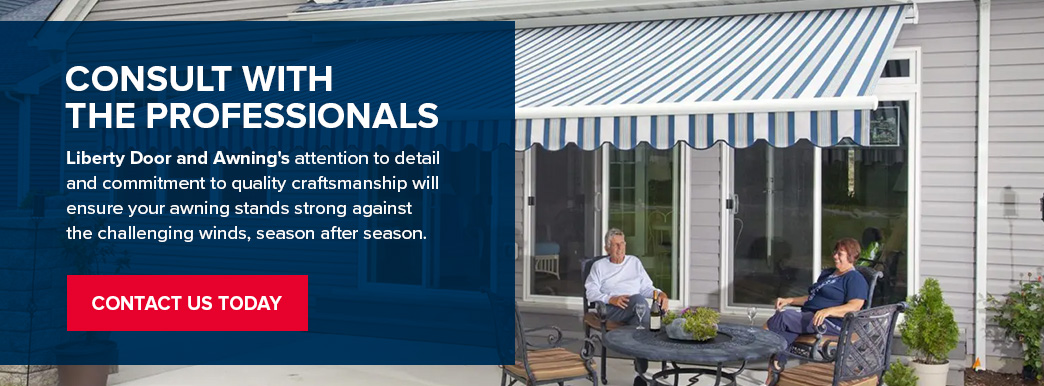
Regarding your awning investment, partnering with a trusted professional can make all the difference. Liberty Door and Awning‘s attention to detail and commitment to quality craftsmanship will ensure your awning stands strong against the challenging winds, season after season.
We prioritize open lines of communication and ensure your inquiries are met with a friendly and helpful voice. You won’t encounter machines or impersonal answering services. Instead, you’ll be greeted by our knowledgeable team, ready to provide you with the needed assistance.
Let us be your trusted partner in creating the outdoor space you’ve always envisioned, backed by our commitment to professionalism and reliable service. Contact us today to discover the possibilities and embark on a journey toward transforming your home with our top-notch products and services.